Sam Bergman
Pianist - Piano Technician

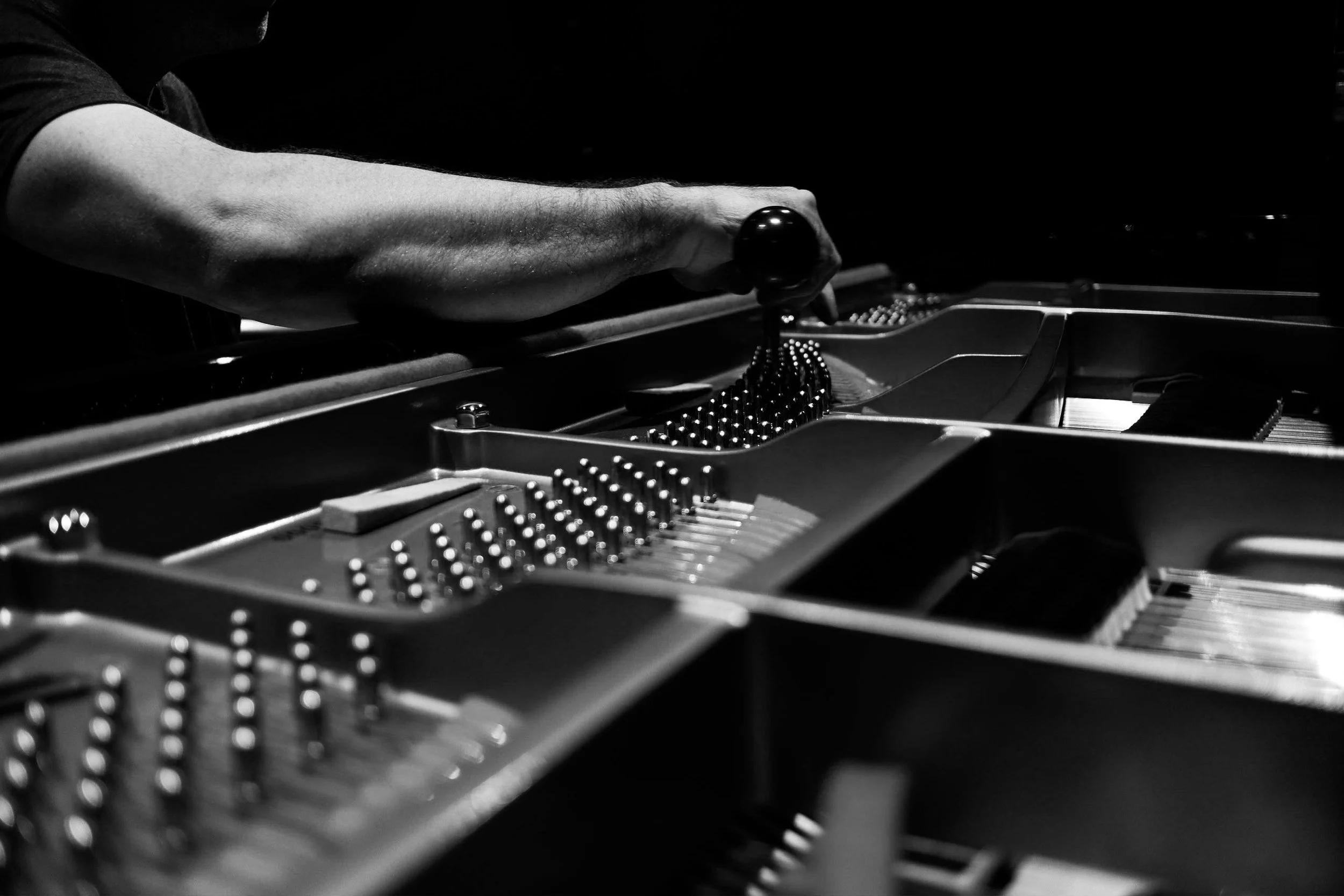
A professional pitch raise piano tuning corrects a piano’s pitch after being left alone for a while.
What a tuning includes:
Pitch stabilization: The tuner sets the overall pitch (commonly A = 440 Hz, or another agreed reference) and brings all twelve notes into correct relation so the piano is in tune across the keyboard.
Temperament work: The tuner establishes a temperament — precise tuning relationships in a central register — then stretches octaves and aligns intervals so the whole instrument sounds harmonically consistent.
Action and regulation inspection: While primarily a tuning, the visit includes checking key action, pedals, and basic regulation issues that affect touch and repeatability; minor adjustments are often made to optimize performance.
Structural review: The tuner assesses pinblock, strings, soundboard, bridges, and hardware for signs of wear or damage and reports any concerns or recommended repairs.
Pitch raise: The tuner performs additional checks and passes to ensure tuning stability.
Typical timing and frequency
A professional tuning usually takes 1.5 to 2 hours.
A pitch raise is normally only necessary when multiple years have passed since the last tuning. Necessity determined at appointment.
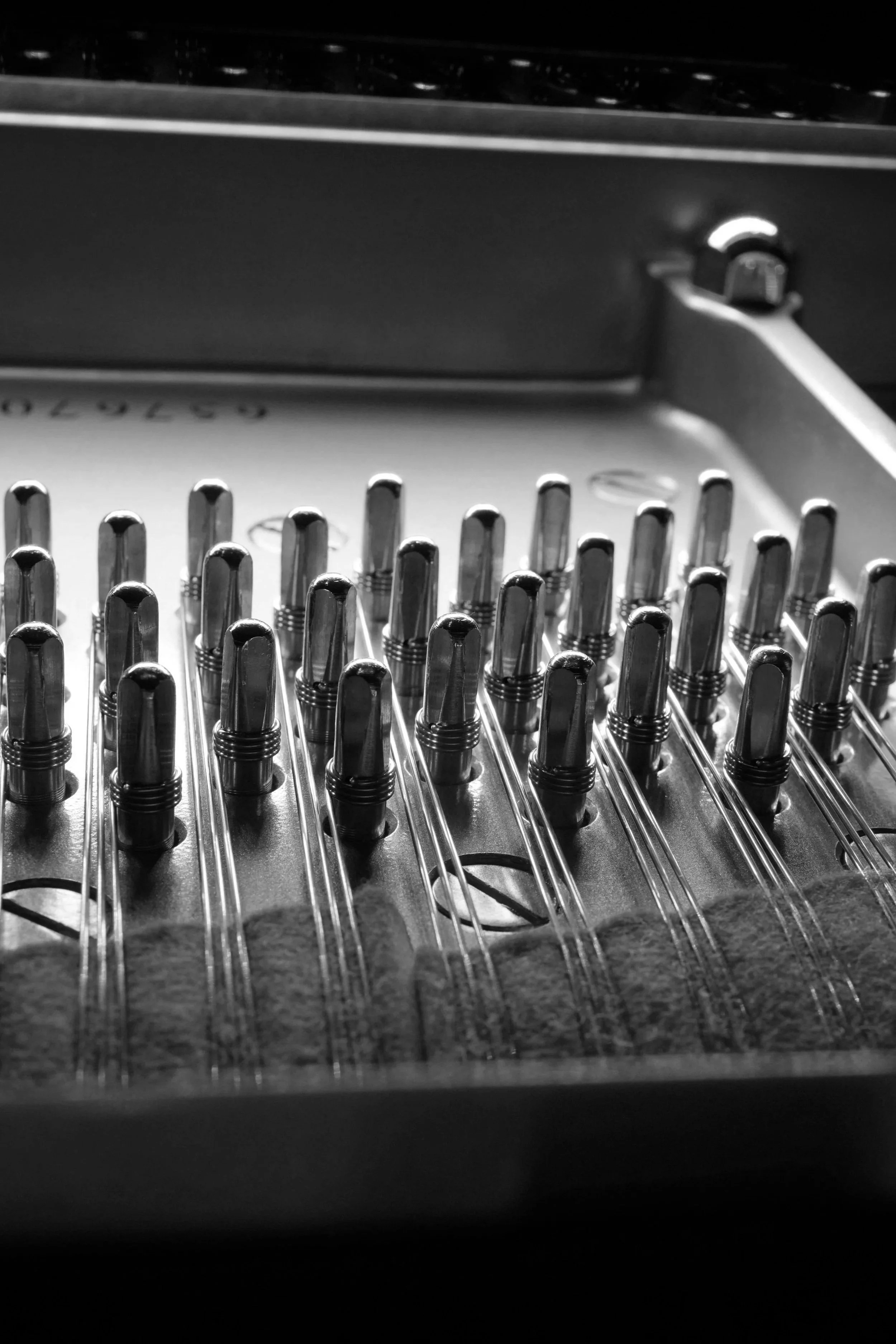
A professional piano tuning restores the instrument’s pitch, so it sounds its best.
What a tuning includes:
Pitch stabilization: The tuner sets the overall pitch (commonly A = 440 Hz, or another agreed reference) and brings all twelve notes into correct relation so the piano is in tune across the keyboard.
Temperament work: The tuner establishes a temperament — precise tuning relationships in a central register — then stretches octaves and aligns intervals so the whole instrument sounds harmonically consistent.
Action and regulation inspection: While primarily a tuning, the visit includes checking key action, pedals, and basic regulation issues that affect touch and repeatability; minor adjustments are often made to optimize performance.
Structural review: The tuner assesses pinblock, strings, soundboard, bridges, and hardware for signs of wear or damage and reports any concerns or recommended repairs.
Typical timing and frequency
A professional tuning usually takes 1.5 to 2 hours.
Most technicians recommend regular tuning at least once a year. Churches and other venues often choose 2-4 times a year or more.

An extreme pitch correction corrects a piano’s pitch when it is severely flat or sharp.
What a tuning includes:
Pitch stabilization: The tuner sets the overall pitch (commonly A = 440 Hz, or another agreed reference) and brings all twelve notes into correct relation so the piano is in tune across the keyboard.
Temperament work: The tuner establishes a temperament — precise tuning relationships in a central register — then stretches octaves and aligns intervals so the whole instrument sounds harmonically consistent.
Action and regulation inspection: While primarily a tuning, the visit includes checking key action, pedals, and basic regulation issues that affect touch and repeatability; minor adjustments are often made to optimize performance.
Structural review: The tuner assesses pinblock, strings, soundboard, bridges, and hardware for signs of wear or damage and reports any concerns or recommended repairs.
Additional passes: An extreme pitch correction includes multiple passes at the piano to stabilize the tuning. If the piano is very out of tune, the strings are not accustomed to being up to proper tension.
Typical timing and frequency
A professional pitch correction usually takes 2 to 2.5 hours.
A pitch correction is necessary when the piano has been left alone for years. I recommend tuning the piano again (regular price) 4-6 weeks later to ensure stability. Necessity determined at appointment.